
This document reflects the analysis and opinions of the Schools Beyond Screens DC working group, based on publicly available sources cited throughout, and is intended to inform community awareness, advocacy and public discussion. If you spot an error in anything described below, please let us know and we’ll issue a correction.
Schools Beyond Screens DC is an all-volunteer parent community group advocating for DCPS to adopt an intentional policy for integrating technology into our schools that is equitable, safe, legal and effective. More than 1,000 parents and caregivers, several of whom are also teachers or education experts, are calling on DCPS for change.
Schools Beyond Screens DC is calling for a pause on student-facing AI in our schools, joining the advocacy groups in Virginia (Arlington, Fairfax and Falls Church City) and Maryland (Baltimore, Howard, Montgomery and Prince George’s County), along with parents in school districts around the country, including New York City and Portland. You can sign our petition here.
How We Got Here
In 2024, DC publicly launched artificial intelligence (AI) tools across local government agencies, at an event held at the Microsoft Innovation & Policy Center on K Street in downtown DC. According to the press release, “As OCTO [Office of the Chief Technology Officer] has evaluated AI and workforce technology solutions, Microsoft has been both a global thought leader and served as a key partner in identifying and adopting those solutions and planning for the future.”
The launch coincided with the rollout of a Mayor’s Order and an AI Values Alignment Handbook, which offers criteria that DC agencies, such as DCPS, should address when identifying and vetting AI tools.
“Transparency” is a key value in the Handbook. Yet most DCPS parents don’t know:
Which student-facing AI products have been deployed at their schools
What these products do, or how they might impact learning outcomes or children’s health
What data they may collect, use, or share, or
What accounts have been set up by the District on behalf of our kids.
Tech and AI companies are making immense profits selling their products to public schools, with many of them landing multimillion-dollar contracts during the COVID pandemic. Research shows that these tools often do not help students learn. In fact, they carry significant risk to health and learning outcomes. Some of these companies operate on a “surveillance infrastructure” business model that makes additional profit by collecting and selling data around how students behave online.
As members of the community who deeply value public education, we have questions about the selection and use of technology developed by any for-profit company relying on tax dollars and students as users.
Understanding the Risks of Student-Facing AI
The DC AI Values Handbook urges agency staff to consider questions in any deployment of AI, including:
Who will benefit from the AI tool?
How have you weighed this tool’s benefit to residents against reasonable alternatives?
What risks of the deprivation of fundamental rights might flow from your proposed tool?
What risks of exacerbating inequity might flow from your proposed tool?
What information is involved in your planned deployment?
How will that information be used?
How will you notify people whose privacy is impacted by your deployment?
We’ll explore some of these good questions below.
Safety and Efficacy: These tools have not been proven safe or effective in any way that supports District-wide rollout to minor children.
Public school systems cannot deploy products at scale with little to no evidence of benefit, but significant risk of harm, among minor children during critical developmental years.
A Stanford review of the evidence base of AI found “causal evidence provides the strongest basis for estimating how a tool impacts students and educators. The current causal research is still very limited: we did not identify any high-quality causal studies in K-12 settings in the U.S. for students and very few for teachers.”
Brookings had similar findings: “After interviews, focus groups, and consultations with over 500 students, teachers, parents, education leaders, and technologists across 50 countries, a close review of over 400 studies, and a Delphi panel, we find that at this point in its trajectory, the risks of utilizing generative AI in children’s education overshadow its benefits. This is largely because the risks of AI differ in nature from its benefits—that is, these risks undermine children’s foundational development—and may prevent the benefits from being realized.”
Finally, “We have no causal studies on long-term impact on social or cognitive development,” said Erin Mote, CEO of InnovateEDU and the EDSAFE AI Alliance.
As reported in The Beacon, the Jackson Reed High School student newspaper, nine AI products were rolled out to DCPS students in the 2025-2026 academic year. These include multiple products associated with Microsoft’s suite of “Learning Accelerators,” such as “Reading Coach, Speaker Coach, Search Coach, Draft Coach, and Immersive Reader.”
What do these products do? According to Microsoft’s website, Reading Coach is a “FREE reading fluency application that provides personalized, engaging practice with safeguarded one-of-a-kind AI generated stories.” Why can’t our children learn to read from human-written stories, of which there is no shortage?
Students can also engage in “co-creating stories with responsible AI.” Why is this product a better option than students creating stories on their own?
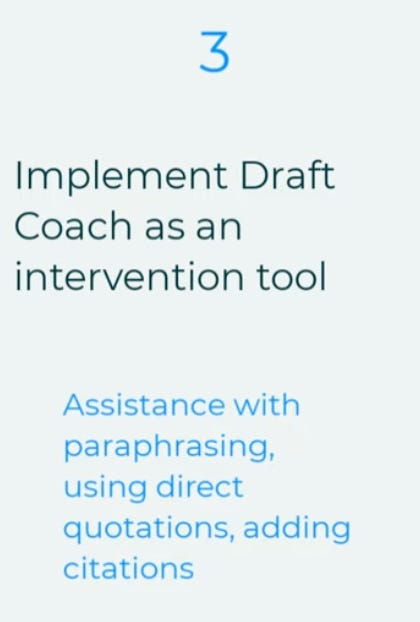
Draft Coach seems to function as an “unintentional plagiarism” checker in Microsoft Word, including “assistance with paraphrasing” (see screenshot from marketing video). It’s a mixed message, since DCPS policy states that “students are prohibited from submitting AI-generated work as their original work or using AI to answer test, exam, or other assignment questions.”
Speaker Coach is a public speaking practice tool that “analyzes how students communicate using built-in technology that listens for ways to improve things like pace, pitch, filler words, and pronunciation. Its robust capabilities replicate feedback from an expert public speaking trainer without the need to have another person listen or critique.” The tool uses the computer’s “microphone and camera to capture real-time insights,” and can provide feedback on “Body Language: Analyzes physical mannerisms, posture, and eye contact (optional).” Is this tool generating recordings of our kids? Where do those recordings and associated metadata go? What kind of feedback do they get on their appearance and speaking style, and might that feedback be biased? If so, what’s the resulting impact and risk of harm for our kids?
How did DCPS select these particular tools and evaluate their efficacy, quality, and safety? What research supports their use, and was that research independently funded? How did they think about the impact of these tools on our kids’ learning process? How is the use of these tools being explained to teachers and students?
In a 2024 podcast explaining DCPS’s strategy for AI in education, when it comes to selecting AI tools, the response is, “We are a Microsoft school district,” and “One of the approaches we took, which is auditing the tools we already have in the District, and when we did that, we saw that we had AI-enhanced tools accessible that could support reading fluency, math fluency, information literacy, and these all happened to be Microsoft tools, and that is probably the easiest approach, low stakes, high impact approach that you could have as a District, is using what you already have.”
Was there a competitive process, or independent review of the quality of these student-facing AI tools? Or did the District turn on the free AI products Microsoft offered, because it was the “easiest” approach?
In the same podcast, several use cases for student-facing AI are provided as inspirational examples, including “recommending alternative words,” in student-produced work, or creating study guide questions to prepare for an exam.
Writing and synthesizing material, such as creating study questions, is the hard work of learning. Using AI to supplant the learning process creates additional problems for students’ long-term cognitive abilities. According to one poll, more than half of teachers are concerned about the impact of AI on students’ critical thinking skills.
Without undergoing the process of productive struggle, these important skills will likely atrophy or never develop in the first place.
Why are we so eager to put our students in front of products with little to no regulation and weak, if any, evidence of benefit? Who actually stands to benefit?
Data Monetization: These products are creating significant private sector profit, while providing dubious, if any, value to the communities they purport to help.
Tech companies are using the term “digital equity” to justify putting products in front of children that are designed for maximizing user engagement and data collection. But is this data collection actually providing value for our communities, including our most under-resourced communities?
Based on publicly available information, DCPS is currently under contract with Naviance, a college and career readiness platform widely used across the country. In the District, it appears to be used in elementary, middle, and high school (see this contract extension for 2025-2026).
A lawsuit against Naviance concerning use of children’s data led to a $17 million settlement agreement. Naviance’s parent company, PowerSchool, was acquired by Bain Capital for $5.6 billion in 2024, touting a student-facing generative AI product, “PowerBuddy.” Bain Capital is a private investment firm with $225 billion in assets under management.
The magnitude of this sale raises questions: Is the true value of the company in the data it collects from students?
In high school, the product collects college application documents like letters of recommendation, transcripts, and essays, and aggregates individuals’ GPA and standardized test scores so users can compare their numbers against previous graduates from their schools to understand their likelihood of college acceptance.
How might such data may be used or shared in the future to impact college admissions or future employment? It’s unclear to what extent this data mining and collection actually benefits the communities and students. What is clear is that these companies are profiting.
Data harvesting and monetization are only one aspect of a much broader set of equity problems with AI in schools. For more scholarship on the topic of data collection, equity, and surveillance, please see:
Risk of Harm, Privacy, and Consent: Student-facing AI products carry significant risk of potential harm to children, with no parental consent pathway and few privacy guard rails.
Parents have not had an opportunity to meaningfully learn about and consent to the use of these platforms by our kids. The data practices of these companies are not clear to legal guardians, including how our kids’ data may be used or shared with third parties. It remains unclear how we might manage informed consent for this data collection for our kids, despite specific language in the DCPS Acceptable Network Use policy that guarantees the right of parents to opt out.
We are seeing juries hold companies like YouTube and Meta accountable for the harms they cause children. We don’t need to make all the same mistakes again by rushing into the deployment of unproven AI tools with minor children.
For more, see:
Transcript: US Senate Hearing On ‘Examining the Harm of AI Chatbots’
Off Task: EdTech Threats to Student Privacy and Equity in the Age of AI (Center for Democracy and Technology)
Meta and YouTube Found Negligent in Landmark Social Media Addiction Case
Google’s YouTube settles social media addiction case with teen
The Big Picture: Invest in Humans
We are advocating for an audit of EdTech vendors currently under contract with DCPS, and would shift investment from IT that fails to meet efficacy and safety criteria, toward what the evidence shows works: expert human support and improving basic infrastructure and facilities issues that continue to plague DCPS schools.
DCPS’s website states that the total budget for “Information Technology” is “$54 million for technology, data systems, and technology support for DCPS students and staff,” and in FY27 this will include “$600K for Artificial Intelligence (AI) literacy and instructional innovation, funding staff training, materials, and new personnel to guide the responsible integration of AI tools into teaching and learning.”
This total budget is much more than the “$37 million for staff who provide services for students with disabilities,” including the budget for audiologists, occupational therapists, physical therapists, speech-language pathologists, and speech therapists, among others.
We have heard directly from many teachers that more support in the second category is actually what they need to be successful, and current funding is insufficient to meet the need. For example, DCPS started the 2025-2026 school year with the following vacancies: 10 speech language pathologists, six social workers, one school counselor, and eight school psychologists. We have also heard that teachers are asking for basic materials like cleaning supplies, air filters, books, and writing supplies.
Given the ethical and environmental problems with the rapid expansion of AI, as well as mounting research indicating harmful effects on child development and learning, we are not optimistic that the integration of student-facing AI tools can be done responsibly any time soon. It’s already difficult for parents to get a transparent accounting of EdTech products more broadly in DCPS, and there is no meaningful opportunity for parents to understand and consent to the use of these products.
As DC makes clear in its own AI Values Handbook, decisions about whether to deploy AI must be thoughtful and weigh the risk of harm versus potential benefit. Given the foundational needs for human capital and basic infrastructure throughout DCPS, and the mounting evidence of the risk of harm to children, the decision is clear: DCPS must immediately pause the use of current and new AI tools for students.